
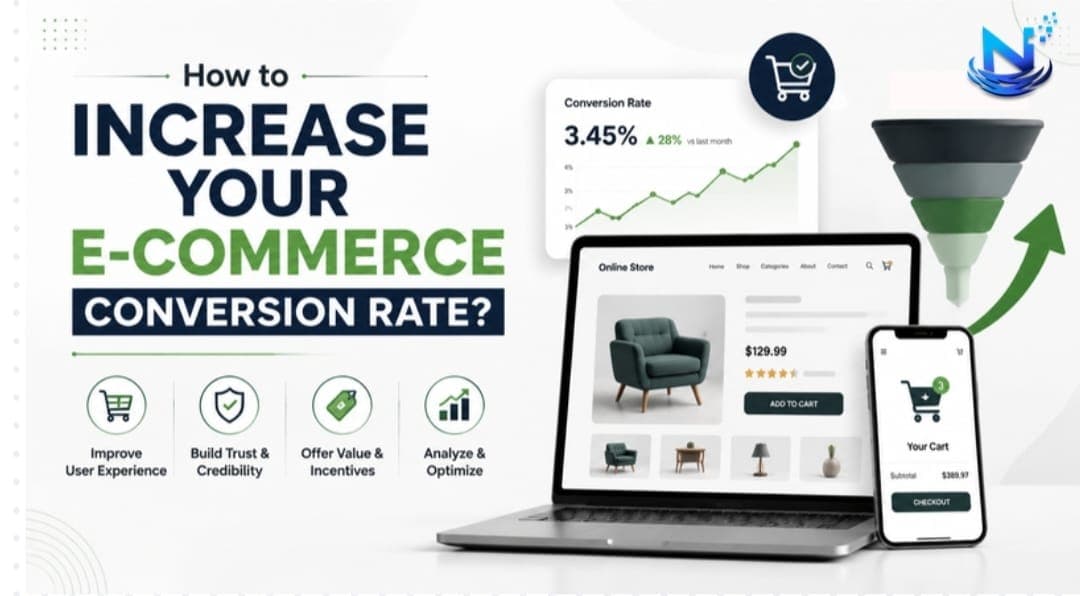
Introduction
Driving traffic to an e-commerce website is only half the battle. The real measure of success lies in how effectively that traffic converts into paying customers. Many online businesses invest significant resources in search engine optimization, paid advertising, social media marketing and email campaigns to attract visitors, yet they often overlook the importance of optimizing the customer journey after users arrive on their website.
A high volume of visitors means little if those visitors leave without making a purchase. This is where e-commerce conversion rate optimization becomes essential. Conversion rate optimization, commonly known as CRO, focuses on improving every aspect of the shopping experience to encourage more visitors to complete desired actions such as purchasing a product, signing up for a newsletter, or adding items to their cart.
By enhancing usability, building trust and eliminating obstacles throughout the buying process, businesses can significantly increase revenue without spending more on customer acquisition. If your store also needs stronger organic visibility, pair CRO improvements with Ecommerce SEO so better traffic and better conversion work together.
What Is an E-commerce Conversion Rate?
An e-commerce conversion rate represents the percentage of website visitors who complete a desired action, most commonly making a purchase. It is calculated by dividing the total number of conversions by the total number of visitors and multiplying the result by one hundred.
While average conversion rates vary depending on industry, product category, pricing and target audience, every online business can benefit from continuously optimizing its website to improve performance. A higher conversion rate means your website is effectively turning visitors into customers, resulting in greater profitability without necessarily increasing marketing expenses.
Understanding this metric provides valuable insight into how well your website meets customer expectations and where improvements are needed.
Why Conversion Rate Optimization Matters
Increasing your e-commerce conversion rate is one of the most cost-effective ways to grow your business. Acquiring new website visitors through advertising and digital marketing often requires significant investment, making it far more economical to improve the percentage of existing visitors who convert into customers.
Even a modest increase in conversion rate can generate substantial growth in revenue over time. Beyond financial benefits, conversion rate optimization enhances customer satisfaction by providing a smoother shopping experience, faster navigation, clearer product information and a more convenient checkout process.
Businesses that prioritize user experience not only achieve higher sales but also build stronger customer loyalty and long-term brand trust.
Create an Exceptional User Experience
User experience is the foundation of successful e-commerce conversion optimization. Visitors should be able to navigate your website effortlessly, locate products quickly and complete purchases without unnecessary distractions or confusion.
Clean website layouts, intuitive navigation menus, readable typography and responsive design contribute to a positive shopping experience across desktops, tablets and smartphones. Since mobile commerce continues to grow rapidly, ensuring your website performs flawlessly on mobile devices is no longer optional.
A responsive website with fast loading pages, simple navigation and accessible product information encourages users to remain engaged and increases the likelihood of completing a purchase.
Build Customer Trust Through Transparency
Trust plays a critical role in every online purchasing decision. Unlike physical retail stores, e-commerce customers cannot examine products in person before buying, making transparency essential for reducing uncertainty.
Businesses should provide detailed product descriptions, high-quality images, accurate specifications, pricing information, shipping policies and return procedures to help customers make informed decisions. Displaying customer reviews, testimonials, trust badges, secure payment indicators and clear contact information further strengthens credibility.
When shoppers feel confident that a business is reliable and transparent, they are significantly more likely to complete a transaction and return for future purchases.
Optimize Product Pages for Better Conversions
Product pages are among the most influential elements of an e-commerce website because they directly impact purchasing decisions. Effective product pages combine persuasive copywriting with high-quality visuals to communicate value clearly and convincingly.
Detailed descriptions should answer common customer questions while highlighting product benefits rather than simply listing features. Professional product photography, multiple viewing angles, zoom functionality and demonstration videos help customers better understand what they are purchasing.
Clear pricing, availability status, estimated delivery times and prominent call-to-action buttons further encourage users to proceed confidently toward checkout. Well-optimized product pages reduce hesitation and improve conversion rates by providing all the information customers need to make purchasing decisions.
Improve Website Speed and Performance
Website speed has become one of the most important factors influencing user satisfaction and search engine visibility. Modern consumers expect web pages to load within seconds and delays often lead to higher bounce rates and abandoned shopping sessions.
Optimizing images, minimizing unnecessary scripts, implementing browser caching and using reliable hosting services can significantly improve website performance. Faster websites not only create better user experiences but also contribute positively to search engine optimization by supporting Google's Core Web Vitals and mobile-first indexing standards.
A fast-loading website demonstrates professionalism and encourages visitors to continue exploring products instead of leaving for competing online stores.
Simplify the Checkout Process
A complicated checkout experience remains one of the leading causes of shopping cart abandonment. Customers appreciate fast, straightforward purchasing processes that minimize unnecessary steps and reduce friction.
Businesses should eliminate unnecessary form fields, provide guest checkout options, support multiple secure payment methods and display transparent shipping costs before the final payment stage. Offering digital wallets, credit cards, online banking and regional payment solutions helps accommodate different customer preferences.
Simplifying checkout reduces abandonment rates while increasing customer satisfaction and completed transactions. Every additional step removed from the purchasing process creates a smoother journey that encourages more successful conversions.
Personalization Enhances Customer Engagement
Modern consumers increasingly expect personalized shopping experiences tailored to their interests and preferences. E-commerce businesses can leverage customer behavior, browsing history and purchase data to recommend relevant products, display personalized offers and create customized marketing campaigns.
Personalized experiences make customers feel understood and valued, encouraging longer browsing sessions and higher purchase frequency. Intelligent product recommendations, targeted promotions and personalized email follow-ups contribute to stronger customer relationships while increasing average order value and lifetime customer value.
Personalization transforms generic shopping experiences into meaningful interactions that drive higher conversion rates.
Use Data to Continuously Optimize Performance
Successful conversion rate optimization is an ongoing process rather than a one-time project. Businesses should regularly monitor website analytics, customer behavior, conversion funnels, and user interactions to identify opportunities for improvement.
Metrics such as bounce rate, average session duration, cart abandonment rate and checkout completion rate provide valuable insights into customer behavior. Conducting A/B testing on headlines, product pages, images, pricing displays and call-to-action buttons allows businesses to determine which variations generate better results.
Data-driven decision-making ensures continuous improvement while reducing guesswork and maximizing marketing return on investment.
Frequently Asked Questions
What is a good e-commerce conversion rate?
A good e-commerce conversion rate varies depending on industry, product type and target audience. Businesses should focus on continuously improving their own performance through testing, optimization and enhanced customer experiences rather than comparing themselves solely with industry averages.
Why do customers abandon their shopping carts?
Shopping cart abandonment commonly occurs because of unexpected shipping costs, lengthy checkout processes, mandatory account creation, limited payment options, slow website performance or concerns about website security and trustworthiness.
Does website speed affect e-commerce conversions?
Yes. Faster websites provide better user experiences, reduce bounce rates, improve customer satisfaction and support stronger search engine rankings, all of which contribute to higher conversion rates and increased online sales.
How important are customer reviews for conversion optimization?
Customer reviews play a significant role in building trust and reducing purchase uncertainty. Positive reviews and authentic testimonials provide social proof that encourages potential customers to complete their purchases with greater confidence.
How often should businesses optimize their e-commerce websites?
Conversion optimization should be an ongoing process. Businesses should regularly analyze website performance, customer behavior and analytics data while continuously testing improvements to maintain competitiveness and adapt to changing customer expectations.
Conclusion
Increasing your e-commerce conversion rate is not about relying on a single tactic but about creating a seamless, trustworthy, and customer-focused shopping experience from the first visit to the final purchase. Every aspect of your website, including responsive design, fast loading speed, persuasive product pages, transparent communication, secure checkout and personalized experiences, contributes to influencing customer decisions.
Businesses that consistently analyze user behavior, embrace data-driven optimization and prioritize customer satisfaction are better positioned to maximize sales without significantly increasing marketing costs. As competition in online retail continues to grow, conversion rate optimization has become a critical strategy for sustainable business success.
By investing in continuous improvements and delivering exceptional shopping experiences, your e-commerce business can strengthen customer loyalty, increase revenue and achieve long-term growth in an increasingly competitive digital marketplace.