
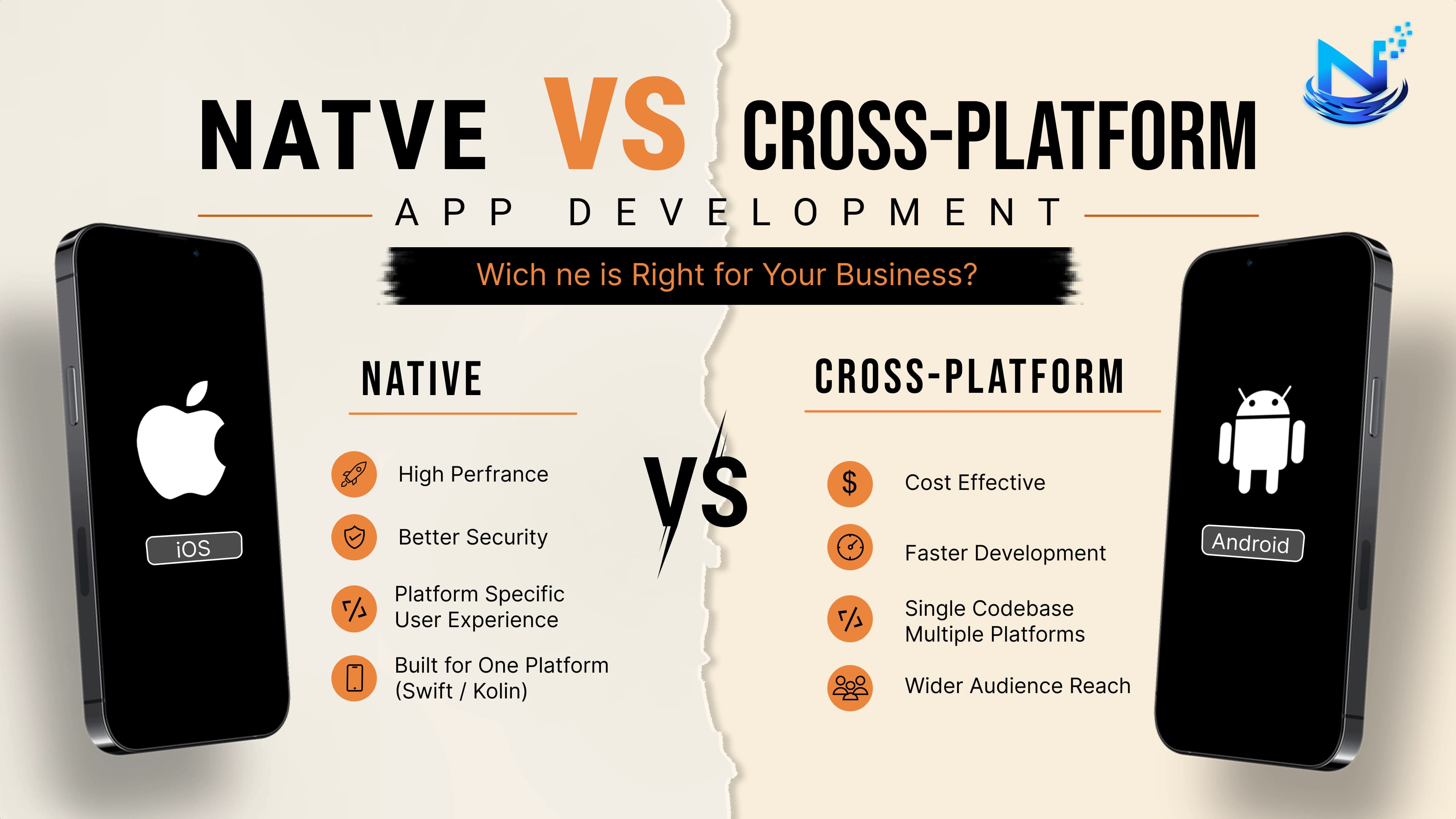
In today's digital-first world, mobile applications have become an essential part of business growth. Whether you are a startup launching your first app or an established enterprise expanding your digital presence, choosing the right development approach is one of the most important decisions you will make. The debate between Native vs Cross-Platform App Development has continued for years because both approaches offer unique advantages depending on business goals, budget, timeline and user expectations.
Modern consumers expect mobile applications to be fast, secure, visually appealing and easy to use. Businesses, on the other hand, seek solutions that provide excellent performance while remaining cost-effective and scalable. This is where understanding the differences between native and cross-platform development becomes crucial.In this comprehensive guide, we will explore the strengths, limitations and ideal use cases of both approaches to help you make an informed decision for your next mobile application project.
What Is Native App Development?
Native app development refers to building mobile applications specifically for a single operating system using its official programming languages and development tools. For Android applications, developers commonly use Kotlin or Java, while iOS applications are built using Swift or Objective-C.Because native applications are designed exclusively for one platform, they have direct access to the device's hardware, operating system features and APIs. This allows developers to create highly optimized applications that deliver exceptional speed, responsiveness and user experience.
Native development also enables businesses to fully utilize smartphone capabilities such as GPS, Camera, Bluetooth, Biometric authentication, Augmented reality and push notifications without relying on third-party frameworks.As a result, many enterprise applications, banking apps, gaming platforms, healthcare solutions, and high-performance applications prefer native development for maximum reliability and performance.
What Is Cross-Platform App Development?
Cross-platform app development allows developers to create a single codebase that works across multiple operating systems, primarily Android and iOS. Instead of writing separate applications for each platform, developers use frameworks that enable code sharing while maintaining a consistent user experience.This development approach significantly reduces development time and costs because most of the application's business logic and interface are written once and deployed across different platforms.
Over the past few years, cross-platform frameworks have evolved dramatically, making them capable of delivering near-native performance for many business applications. They are now widely used for E-Commerce apps, Educational platforms, Healthcare portals, Booking systems, Social networking applications and Business management software.
For startups and businesses looking to launch products quickly, cross-platform development offers an attractive balance between cost efficiency and functionality.
Performance Comparison Between Native and Cross-Platform Apps
Performance is one of the biggest deciding factors when choosing between native and cross-platform development.
Native applications generally offer superior performance because they communicate directly with the operating system. They provide faster loading times, smoother animations, quicker response rates and better handling of intensive tasks such as gaming, real-time video processing, augmented reality and complex graphics.
Cross-platform applications have improved considerably over recent years and many modern frameworks deliver excellent performance for standard business applications. For most content-based apps, online stores, booking platforms and service applications, users may not notice any significant performance difference.
However, applications that require heavy graphics rendering, continuous background processing, or advanced hardware interaction still benefit from native development.
Development Cost and Time
Budget plays a major role in selecting the right development approach.
Native app development usually requires building two separate applications for Android and iOS. This means hiring platform-specific developers, maintaining separate codebases, conducting independent testing and managing individual updates. Consequently, the overall project cost and development timeline are generally higher.
Cross-platform development is more economical because developers maintain a single codebase for multiple platforms. This reduces development effort, accelerates deployment, simplifies maintenance and lowers long-term operational costs.
For startups, small businesses and companies validating a new product idea, cross-platform development often provides a faster path to market while keeping expenses under control.
User Experience and Interface Design
User experience directly influences customer satisfaction, engagement, and retention.
Native applications provide the most authentic platform-specific experience. Since they follow each operating system's design principles, users enjoy familiar navigation, smoother interactions and better overall usability. The application naturally adapts to operating system updates and device capabilities.
Cross-platform applications also provide attractive and consistent interfaces, although achieving platform-specific design perfection may require additional customization. Modern development frameworks have significantly narrowed this gap, allowing businesses to create visually appealing applications that perform well across different devices.
If delivering a premium user experience is your highest priority, native development remains the preferred option.
Maintenance and Scalability
Every mobile application requires continuous updates, security improvements, feature enhancements and compatibility adjustments.
Managing native applications means maintaining separate codebases, which increases maintenance effort and development costs over time. Every feature update often needs to be implemented independently for Android and iOS. Cross-platform applications simplify maintenance because developers modify a single codebase that updates multiple platforms simultaneously. This makes long-term maintenance more efficient and cost-effective.
As businesses grow, both native and cross-platform applications can scale successfully when developed using proper architecture and coding standards. The right choice depends more on future business requirements than on technical limitations alone.
Security Considerations
Security is especially important for industries such as finance, healthcare, government services, and E-Commerce.
Native applications generally provide stronger security capabilities because they integrate directly with operating system security features. They support secure data storage, encryption, biometric authentication and platform-specific security updates more efficiently.
Cross-platform applications can also achieve excellent security standards when implemented correctly. Developers can incorporate secure authentication, encrypted communication, secure APIs and modern cybersecurity practices. However, maintaining security across multiple platforms may require additional testing and framework updates.
Businesses handling sensitive customer information should prioritize security planning regardless of the chosen development approach.
Which Option Is Best for Your Business?
There is no universal answer because every business has different objectives.
If your application requires exceptional performance, advanced hardware integration, superior user experience and maximum security, native app development is typically the better investment. Industries such as banking, gaming, healthcare and enterprise software frequently choose native applications because reliability and performance are critical.
On the other hand, if your goal is to launch quickly, reduce development costs, reach both Android and iOS users simultaneously and simplify long-term maintenance, cross-platform development is often the smarter choice. Many startups and growing businesses successfully use cross-platform solutions to validate ideas before investing in platform-specific applications.
Ultimately, the best development strategy depends on your budget, timeline, target audience, feature requirements and long-term business goals.
Future of Mobile App Development
The future of mobile application development is moving toward greater efficiency without compromising user experience. Cross-platform frameworks continue to improve their performance, making them suitable for increasingly complex applications. At the same time, native development remains the benchmark for premium performance and deep hardware integration.
Artificial intelligence, machine learning, Internet of Things (IoT), augmented reality, wearable devices and cloud computing are reshaping how mobile applications are developed. Businesses planning long-term digital transformation should evaluate not only current requirements but also future scalability, emerging technologies, and evolving customer expectations before selecting a development approach.
Frequently Asked Questions
Is native app development better than cross-platform development?
Native development generally offers better performance, stronger security, and a superior user experience. Cross-platform development is more cost-effective and faster for businesses targeting multiple platforms with a single application.
Which development approach is more affordable?
Cross-platform development is usually more affordable because one codebase supports both Android and iOS, reducing development and maintenance costs.
Can cross-platform apps perform like native apps?
Modern cross-platform frameworks deliver excellent performance for most business applications. However, highly demanding applications involving advanced graphics, gaming, or intensive hardware interaction still benefit from native development.
Which option is best for startups?
Startups often choose cross-platform development because it enables faster product launches, lower development costs, and broader market reach while maintaining good performance.
Should enterprises choose native development?
Many enterprises prefer native development for applications that require high security, exceptional performance, complex functionality, and seamless integration with device hardware.
Conclusion
Choosing between Native vs Cross-Platform App Development is a strategic decision that directly impacts your application's performance, user experience, development cost, and future scalability. Native development remains the ideal choice for businesses seeking maximum speed, security, and platform-specific optimization, while cross-platform development offers significant advantages in terms of affordability, faster deployment, and simplified maintenance.
Rather than asking which approach is universally better, businesses should evaluate their specific objectives, target audience, technical requirements, and long-term growth strategy. By aligning your development approach with your business goals, you can build a mobile application that not only meets user expectations but also supports sustainable digital success in an increasingly competitive marketplace.
Useful links
Explore professional website, SEO, and digital growth services.
React NativeOfficial documentation for building cross-platform mobile applications with React Native.
React Native development serviceExplore relevant internal support for mobile app planning, React Native builds, APIs, and performance.